Developing Virtues and Character Strengths
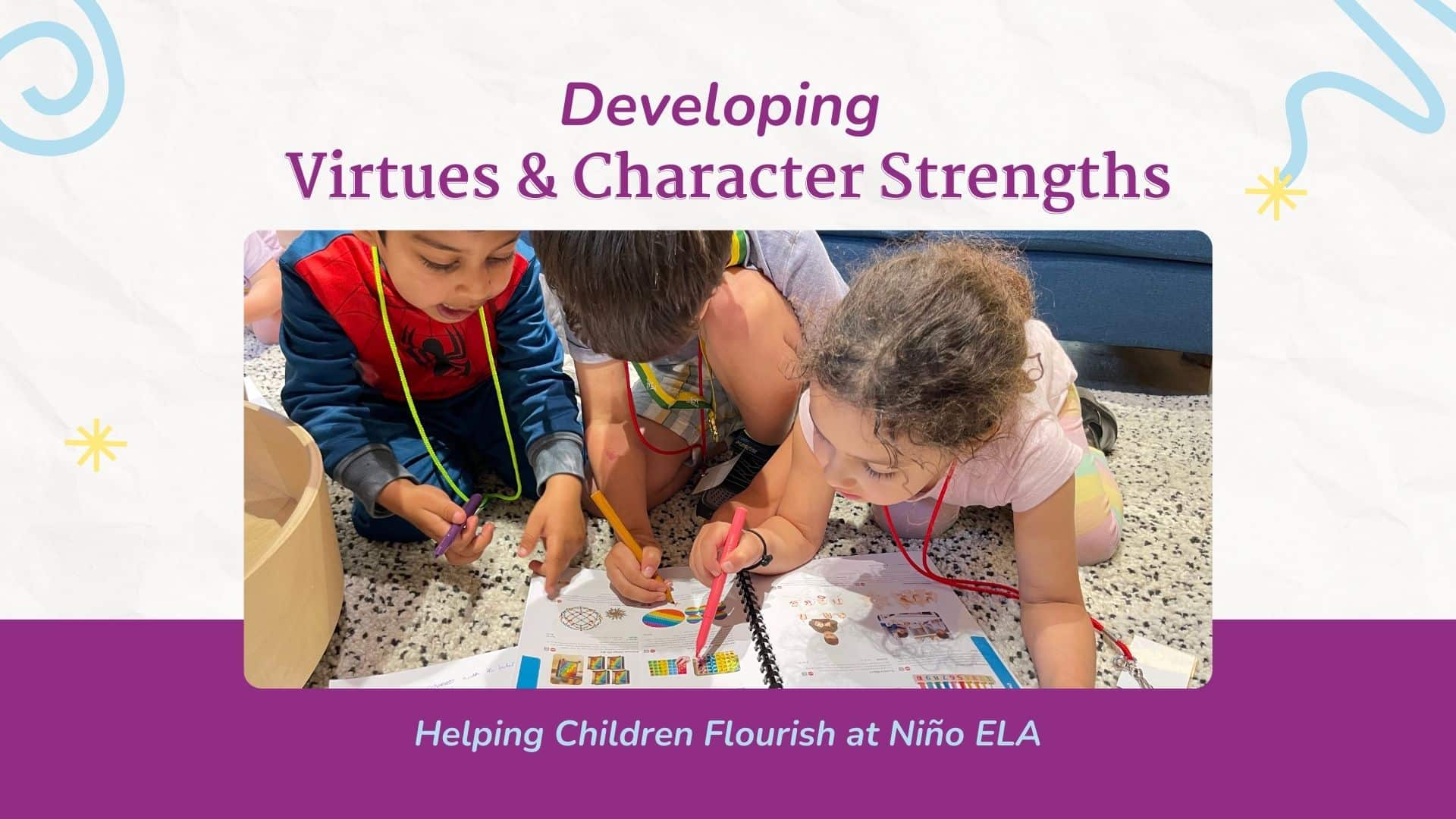
Developing Virtues and Character Strengths
How We Support Children at Niño ELA
At Niño ELA, we believe children flourish when the important adults in their lives—families and educators—share a common language and understanding. Guided by our Positive Education approach, we focus not only on what children learn, but how they learn, relate, and grow as capable, curious individuals.
Every child brings their own unique set of character strengths. When these strengths are recognised and nurtured, children develop confidence, emotional wellbeing, and a strong sense of self. By intentionally focusing on virtues and character strengths, we support children to see themselves as capable, caring, and resilient—laying strong foundations for lifelong learning.
Building a Positive Sense of Self
Children are learning about who they are every day. When we intentionally name and celebrate character strengths—such as curiosity, kindness, or perseverance—we help children build a positive self-image.
Rather than focusing solely on outcomes (“Did you finish the puzzle?”), we place value on the learning process (“You kept trying even when it felt tricky.”). This subtle shift helps children understand that effort, persistence, and thinking matter just as much as results—and often more.
Over time, children learn to see challenges as opportunities, and themselves as learners who can grow.
What are Character Strengths and Virtues?
Character strengths are the qualities that shape how children think, feel, explore, and connect with others. They are expressed naturally through play, learning, and relationships.
Virtues are broader guiding qualities that support positive behaviour and wellbeing. Each virtue is made up of several character strengths. The VIA (Values in Action) framework is a research-based approach that identifies the following six key virtues commonly seen in early childhood::
- Wisdom & Knowledge – Using curiosity and creativity to explore and learn Character strengths: curiosity, creativity, love of learning
- Courage – Trying new things and persisting through challenges Character strengths: bravery, perseverance, zest
- Humanity – Caring for and connecting with others Character strengths: kindness, love, social intelligence
- Justice – Working together fairly and responsibly Character strengths: fairness, leadership, teamwork
- Temperance – Managing emotions and practising self-regulation Character strengths: self-regulation, humility, prudence
- Transcendence – Finding joy, meaning, and appreciation in everyday moments Character strengths: gratitude, hope, humour, appreciation of beauty.
At Niño ELA, you may hear educators naming strengths such as curiosity, kindness, perseverance, creativity, humour, leadership, and self-regulation. Children demonstrate these in different ways and at different times. By giving language to these strengths, we help children understand themselves and feel proud of their efforts.
Why Talking about Strengths Matters
When adults use strengths-based language, children learn to view themselves as capable, valued, and supported. This approach focuses on how children engage with experiences, not just the end result.
You may hear educators say:
- “You showed perseverance when you kept trying.” (Courage)
- “I noticed your kindness when you helped your friend.” (Humanity)
- “Your curiosity helped you discover something new.” (Wisdom & Knowledge)
Talking about character strengths supports children to:
- Build confidence and positive self-talk
- Understand their emotions and behaviours
- Persist through challenges
- Build friendships and collaborate with others.
Research shows that children who can recognise and use their character strengths are more resilient, engaged, and confident learners.
How we Support Strengths at Niño ELA
Our indoor and outdoor learning environments are thoughtfully designed to encourage independence, collaboration, creativity, and problem-solving. These spaces invite children to explore, take risks, and learn in ways that feel meaningful to them.
Educators observe closely, respond with intention, and offer encouragement that highlights children’s strengths. They also model these strengths themselves, showing children how to:
- Offer kindness and care to others (Humanity)
- Explore with curiosity and wonder (Wisdom & Knowledge)
- Keep trying when learning feels challenging (Courage)
- Practise patience and self-regulation (Temperance)
Through everyday interactions, children see what these virtues look like in action.
Families and Educators, Growing Together
Children benefit most when families and educators share the same language around character strengths and virtues. Families can support this learning by noticing and naming strengths at home.
Some simple ideas include:
- Spot strengths in everyday moments: “You showed kindness when you shared your toy.”
- Celebrate effort, not just outcomes: “You kept going even when it was hard—that’s perseverance.”
- Ask reflective questions: “What helped you keep trying?”
- Model virtues aloud: “I’m showing gratitude by saying thank you for your help.”
- Connect with educators to learn which strengths your child is exploring at the centre.
These shared conversations help children connect their experiences at home and at Niño ELA, reinforcing confidence, resilience, and self-awareness.
Helping Children Flourish
By noticing, naming, and nurturing character strengths and virtues, we support children to develop emotional wellbeing, confidence, and a positive sense of self—skills that support them in learning, relationships, and life beyond early childhood.
At Niño ELA, we value the important role families play. Together, we help children grow:
- Caring hearts (Humanity)
- Curious minds (Wisdom & Knowledge)
- Resilient spirits (Courage, Temperance & Transcendence)
- And a love of learning that lasts a lifetime
By focusing on virtues and character strengths, we give children the language, understanding, and experiences they need to build strong character and flourish.
Supporting Strong Foundations
If you’d like to learn more about our how we support the Development of Virtues and Character Strengths at Niño ELA , speak with your Niño ELA educator or contact your local Niño ELA centre today.
References
- Greater Good in Education. Why Character Strengths Matter.
- Care for Kids. Character Strengths and EYLF.
- VIA Institute on Character. Character Strengths Survey & Character Reports.
- What Are Character Strengths & Virtues?
Developing Virtues and Character Strengths
How We Support Children at Niño ELA
At Niño ELA, we believe children flourish when the important adults in their lives—families and educators—share a common language and understanding. Guided by our Positive Education approach, we focus not only on what children learn, but how they learn, relate, and grow as capable, curious individuals.
Every child brings their own unique set of character strengths. When these strengths are recognised and nurtured, children develop confidence, emotional wellbeing, and a strong sense of self. By intentionally focusing on virtues and character strengths, we support children to see themselves as capable, caring, and resilient—laying strong foundations for lifelong learning.
Building a Positive Sense of Self
Children are learning about who they are every day. When we intentionally name and celebrate character strengths—such as curiosity, kindness, or perseverance—we help children build a positive self-image.
Rather than focusing solely on outcomes (“Did you finish the puzzle?”), we place value on the learning process (“You kept trying even when it felt tricky.”). This subtle shift helps children understand that effort, persistence, and thinking matter just as much as results—and often more.
Over time, children learn to see challenges as opportunities, and themselves as learners who can grow.
What are Character Strengths and Virtues?
Character strengths are the qualities that shape how children think, feel, explore, and connect with others. They are expressed naturally through play, learning, and relationships.
Virtues are broader guiding qualities that support positive behaviour and wellbeing. Each virtue is made up of several character strengths. The VIA (Values in Action) framework is a research-based approach that identifies the following six key virtues commonly seen in early childhood:
- Wisdom & Knowledge – Using curiosity and creativity to explore and learn Character strengths: curiosity, creativity, love of learning
- Courage – Trying new things and persisting through challenges Character strengths: bravery, perseverance, zest
- Humanity – Caring for and connecting with others Character strengths: kindness, love, social intelligence
- Justice – Working together fairly and responsibly Character strengths: fairness, leadership, teamwork
- Temperance – Managing emotions and practising self-regulation Character strengths: self-regulation, humility, prudence
- Transcendence – Finding joy, meaning, and appreciation in everyday moments Character strengths: gratitude, hope, humour, appreciation of beauty.
At Niño ELA, you may hear educators naming strengths such as curiosity, kindness, perseverance, creativity, humour, leadership, and self-regulation. Children demonstrate these in different ways and at different times. By giving language to these strengths, we help children understand themselves and feel proud of their efforts.
Why Talking about Strengths Matters
When adults use strengths-based language, children learn to view themselves as capable, valued, and supported. This approach focuses on how children engage with experiences, not just the end result.
You may hear educators say:
- “You showed perseverance when you kept trying.” (Courage)
- “I noticed your kindness when you helped your friend.” (Humanity)
- “Your curiosity helped you discover something new.” (Wisdom & Knowledge)
Talking about character strengths supports children to:
- Build confidence and positive self-talk
- Understand their emotions and behaviours
- Persist through challenges
- Build friendships and collaborate with others.
Research shows that children who can recognise and use their character strengths are more resilient, engaged, and confident learners.
How we Support Strengths at Niño ELA
Our indoor and outdoor learning environments are thoughtfully designed to encourage independence, collaboration, creativity, and problem-solving. These spaces invite children to explore, take risks, and learn in ways that feel meaningful to them.
Educators observe closely, respond with intention, and offer encouragement that highlights children’s strengths. They also model these strengths themselves, showing children how to:
- Offer kindness and care to others (Humanity)
- Explore with curiosity and wonder (Wisdom & Knowledge)
- Keep trying when learning feels challenging (Courage)
- Practise patience and self-regulation (Temperance)
Through everyday interactions, children see what these virtues look like in action.
Families and Educators, Growing Together Children benefit most when families and educators share the same language around character strengths and virtues. Families can support this learning by noticing and naming strengths at home. Some simple ideas include:
- Spot strengths in everyday moments: “You showed kindness when you shared your toy.”
- Celebrate effort, not just outcomes: “You kept going even when it was hard—that’s perseverance.”
- Ask reflective questions: “What helped you keep trying?”
- Model virtues aloud: “I’m showing gratitude by saying thank you for your help.”
- Connect with educators to learn which strengths your child is exploring at the centre.
These shared conversations help children connect their experiences at home and at Niño ELA, reinforcing confidence, resilience, and self-awareness.
Helping Children Flourish By noticing, naming, and nurturing character strengths and virtues, we support children to develop emotional wellbeing, confidence, and a positive sense of self—skills that support them in learning, relationships, and life beyond early childhood.
At Niño ELA, we value the important role families play. Together, we help children grow:
- Caring hearts (Humanity)
- Curious minds (Wisdom & Knowledge)
- Resilient spirits (Courage, Temperance & Transcendence)
- And a love of learning that lasts a lifetime,
By focusing on virtues and character strengths, we give children the language, understanding, and experiences they need to build strong character and flourish.
Supporting Strong Foundations
If you’d like to learn more about our how we support the Development of Virtues and Character Strengths at Niño ELA , speak with your Niño ELA educator or contact your local Niño ELA centre today.
References
- Greater Good in Education. Why Character Strengths Matter.
- Care for Kids. Character Strengths and EYLF.
- VIA Institute on Character. Character Strengths Survey & Character Reports.
- What Are Character Strengths & Virtues?