Positive Relationships: Building Strong Foundations for Family Wellbeing
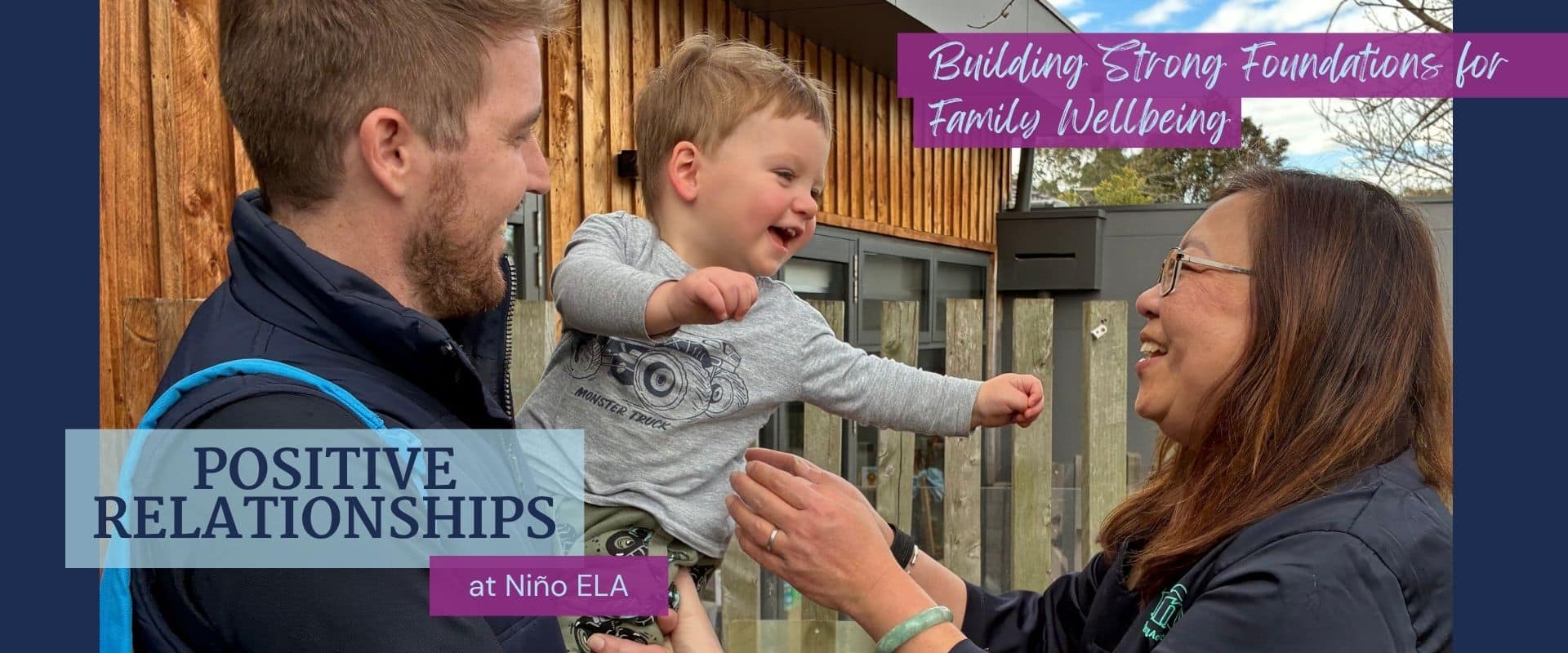
Positive Relationships: Building Strong Foundations for Family Wellbeing
Through Niño ELA’s Positive Education curriculum, Positive Relationships are a cornerstone of wellbeing. They are not just nice to have; they are essential for helping children and families flourish. When we feel connected, supported, and valued, we thrive. This is true for adults and even more so for children.
At Niño ELA, our values, Everyday Wonder, Bravery, Respect, and The True You, guide how we build and nurture these relationships every day.
Why Positive Relationships Matter
We all have a fundamental biological and psychological need for social interactions and connectedness. Simply knowing that there are people who care about us is a powerful pathway to thriving. Research shows that strong, supportive relationships are linked to higher levels of wellbeing, while lacking these connections can make life more challenging.
Positive relationships provide a sense of belonging, security, and trust. They help us manage stress, build resilience, and experience joy. For children, these connections are the foundation for learning and emotional growth. Everyday Wonder reminds us to notice and celebrate these moments of connection, whether it’s a child sharing a story or a family joining in a centre event.
Positive Relationships for Children
For children, relationships are the building blocks of social and emotional wellbeing. Loving, stable, and responsive connections help children feel safe and valued. Through these relationships, children learn how to:
- Think and understand
- Communicate and express emotions
- Develop social skills and positive behaviour
Building strong relationships supports acceptance, self-esteem, and higher-order thinking skills, all essential for lifelong learning and resilience. When children feel connected, they are more confident, curious, and ready to explore the world around them.
This is where bravery shines – children feel brave enough to try new things when they know they are supported by caring relationships.
Families and Educators: Working Together for Your Child’s Success
At Niño ELA, we believe that when families and educators work hand in hand, children flourish. Your involvement plays an important role in creating the best possible learning experience for your child.
Why does this partnership matter?
- Trust and Confidence
Building strong relationships with your child’s educators helps you feel comfortable sharing your child’s needs, interests, and any concerns. This trust ensures your child receives consistent care and support tailored to their individuality, honouring Niño ELA’s value of ‘The True You’. -
Active Participation
When families join in events, celebrations, and learning activities, it strengthens the connection between home and the centre. This sense of continuity helps children feel secure and supported in both environments.
- Better Outcomes for Children
Strong family- educator partnerships lead to improved learning, social development, and emotional wellbeing for children. When we work together, your child benefits from a network of care that nurtures growth and confidence.
Your Invitation
We encourage you to take part in our community, whether it’s attending family events, sharing feedback, or simply having a chat with your child’s educator. Every interaction helps build a stronger foundation for your child’s success.
How to Build Strong Connections with Educators
Taking time to talk with your child’s educators is one of the most powerful ways to support your child’s learning and wellbeing. These conversations create a bridge between home and the learning environment, ensuring your child feels understood and supported in each setting.
Here’s how you can make these interactions meaningful:
- Share Your Child’s Interests and Strengths: Does your child love dinosaurs, music, or building things? Let educators know! When they understand what excites your child, they can incorporate those interests into activities, sparking Niño ELA’s value of ‘Everyday Wonder’.
- Talk About Your Child’s Needs: Every child is unique. Share routines, comfort items, or strategies that help your child feel secure. For example, if your child needs a quiet moment before joining group play, educators can plan for that.
- Celebrate Milestones Together: If your child learns a new skill at home, like writing their name or riding a bike, tell their educators. They can celebrate these achievements too, reinforcing their confidence and agency.
- Ask Questions and Listen: Educators spend a lot of time observing your child in a social setting. Ask what they notice about friendships, interests, and progress. These insights help you support learning at home.
- Stay Connected Beyond Drop Off: If you’re short on time, use quick notes, emails, or our communication app Xplor to share updates. Even small messages like “We read a book about space last night – she loved it!” help educators connect learning experiences.
Tips for Families to Build Positive Relationships
Here are some practical ways to nurture positive relationships at home and with educators:
1. Show Consistent Love and Support
Children thrive when they feel loved and secure. Simple gestures, like listening attentively, offering hugs, and praising effort, build trust and confidence.
2. Communicate Openly
Encourage your child to share thoughts and feelings. Use open-ended questions like “What was the best part of your day?” to spark conversation.
3. Participate in Centre Activities
Join in with our centre events, celebrations, and parent partnership meetings. Your involvement strengthens the link between home and Niño ELA, supporting positive outcomes for your child.
4. Model Positive Relationships
Children learn by example. Show kindness, empathy, and respect in your interactions with others, your child will mirror these behaviours.
5. Create Family Rituals
Simple routines like family dinners, bedtime stories, or weekend outings foster connection and a sense of belonging.
Quick Checklist for Families
✔ Share your child’s interests and routines with educators
✔ Ask about your child’s progress and friendships
✔ Join centre events and activities
✔ Communicate regularly, big or small updates matter
The Ripple Effect of Connection
Positive relationships, whether at home or at Niño ELA, create environments where children feel valued and supported. This sense of belonging drives wellbeing, resilience, and success. By prioritising positive relationships, we build communities where children and families can truly flourish.
When families and educators work together, the benefits extend beyond the classroom. Children experience stability, confidence, and joy. Families feel empowered and connected. And educators can provide the best possible care and learning experiences for children.
Join Us in Building a Connected Community at Niño ELA
We invite you to be part of our journey in creating strong, positive relationships. Together, we can give every child the best start in life, a foundation built on trust, love, and collaboration.
If you’d like to learn more about Positive Relationships at Niño ELA, speak with your Niño ELA educator or contact your local Niño ELA centre today.
Sources:
- betterhealth.vic.gov.au/health/healthyliving/Strong-relationships-strong-health
Positive Relationships: Building Strong Foundations for Family Wellbeing
Through Niño ELA’s Positive Education curriculum, Positive Relationships are a cornerstone of wellbeing. They are not just nice to have; they are essential for helping children and families flourish. When we feel connected, supported, and valued, we thrive. This is true for adults and even more so for children.
At Niño ELA, our values, Everyday Wonder, Bravery, Respect, and The True You, guide how we build and nurture these relationships every day.
Why Positive Relationships Matter
We all have a fundamental biological and psychological need for social interactions and connectedness. Simply knowing that there are people who care about us is a powerful pathway to thriving. Research shows that strong, supportive relationships are linked to higher levels of wellbeing, while lacking these connections can make life more challenging.
Positive relationships provide a sense of belonging, security, and trust. They help us manage stress, build resilience, and experience joy. For children, these connections are the foundation for learning and emotional growth. Everyday Wonder reminds us to notice and celebrate these moments of connection, whether it’s a child sharing a story or a family joining in a centre event.
Positive Relationships for Children
For children, relationships are the building blocks of social and emotional wellbeing. Loving, stable, and responsive connections help children feel safe and valued. Through these relationships, children learn how to:
• Think and understand
• Communicate and express emotions
• Develop social skills and positive behaviours
Building strong relationships supports acceptance, self-esteem, and higher-order thinking skills, all essential for lifelong learning and resilience. When children feel connected, they are more confident, curious, and ready to explore the world around them.
This is where bravery shines – children feel brave enough to try new things when they know they are supported by caring relationships.
Families and Educators: Working Together for Your Child’s Success
At Niño ELA, we believe that when families and educators work hand in hand, children flourish. Your involvement plays an important role in creating the best possible learning experience for your child.
Why does this partnership matter?
• Trust and Confidence: Building strong relationships with your child’s educators helps you feel comfortable sharing your child’s needs, interests, and any concerns. This trust ensures your child receives consistent care and support tailored to their individuality, honouring Niño ELA’s value of ‘The True You’.
• Active Participation: When families join in events, celebrations, and learning activities, it strengthens the connection between home and the centre. This sense of continuity helps children feel secure and supported in both environments.
• Better Outcomes for Children: Strong family- educator partnerships lead to improved learning, social development, and emotional wellbeing for children. When we work together, your child benefits from a network of care that nurtures growth and confidence.
Your Invitation
We encourage you to take part in our community, whether it’s attending family events, sharing feedback, or simply having a chat with your child’s educator. Every interaction helps build a stronger foundation for your child’s success.
How to Build Strong Connections with Educators
Taking time to talk with your child’s educators is one of the most powerful ways to support your child’s learning and wellbeing. These conversations create a bridge between home and the learning environment, ensuring your child feels understood and supported in each setting.
Here’s how you can make these interactions meaningful:
• Share Your child’s interests and strengths: Does your child love dinosaurs, music, or building things? Let educators know! When they understand what excites your child, they can incorporate those interests into activities, sparking Niño ELA’s value of ‘Everyday Wonder’.
• Talk About Your Child’s Needs: Every child is unique. Share routines, comfort items, or strategies that help your child feel secure. For example, if your child needs a quiet moment before joining group play, educators can plan for that.
• Celebrate Milestones Together: If your child learns a new skill at home, like writing their name or riding a bike, tell their educators. They can celebrate these achievements too, reinforcing their confidence and agency.
• Ask Questions and Listen: Educators spend a lot of time observing your child in a social setting. Ask what they notice about friendships, interests, and progress. These insights help you support learning at home.
• Stay Connected Beyond Drop Off: If you’re short on time, use quick notes, emails, or our communication app Xplor to share updates. Even small messages like “We read a book about space last night – she loved it!” help educators connect learning experiences.
Tips for Families to Build Positive Relationships
Here are some practical ways to nurture positive relationships at home and with educators:
1. Show Consistent Love and Support
Children thrive when they feel loved and secure. Simple gestures, like listening attentively, offering hugs, and praising effort, build trust and confidence.
2. Communicate Openly
Encourage your child to share thoughts and feelings. Use open-ended questions like “What was the best part of your day?” to spark conversation.
3. Participate in Centre Activities
Join in with our centre events, celebrations, and parent partnership meetings. Your involvement strengthens the link between home and Niño ELA, supporting positive outcomes for your child.
4. Model Positive Relationships
Children learn by example. Show kindness, empathy, and respect in your interactions with others, your child will mirror these behaviours.
5. Create Family Rituals
Simple routines like family dinners, bedtime stories, or weekend outings foster connection and a sense of belonging.
Quick Checklist for Families
✔ Share your child’s interests and routines with educators
✔ Ask about your child’s progress and friendships
✔ Join centre events and activities
✔ Communicate regularly, big or small updates matter
The Ripple Effect of Connection
Positive relationships, whether at home or at Niño ELA, create environments where children feel valued and supported. This sense of belonging drives wellbeing, resilience, and success. By prioritising positive relationships, we build communities where children and families can truly flourish.
When families and educators work together, the benefits extend beyond the classroom. Children experience stability, confidence, and joy. Families feel empowered and connected. And educators can provide the best possible care and learning experiences for children.
Join Us in Building a Connected Community at Niño ELA
We invite you to be a part of our journey in creating strong, positive relationships. Together, we can give every child the best start in life, a foundation built on trust, love and collaboration.
If you’d like to learn more about our Positive Relationships, speak with your Niño ELA educator or contact your local Niño ELA centre today. We are always here to work alongside you and support your little one’s journey with care, understanding and respect.
Sources:
- betterhealth.vic.gov.au/health/healthyliving/Strong-relationships-strong-health